Tarantella: Cicerenella sei buona e bella (Tarantella: Cicerenella you are kind and beautiful)


La parola “tarantella” indica alcune danze tradizionali tipiche del sud Italia. Cicerenella è una famosa tarantella del XVIII secolo che è stata reinterpretata attraverso gli anni da grandissimi autori quali Roberto Murolo e Beppe Barra.
Ascolta di seguito alcune versioni del brano.
Quale versione preferisci?

The word “tarantella” indicates some traditional dances typical of southern Italy.
Cicerenella is a famous tarantella from the 18th century that has been reinterpreted through the years by great artists such as Roberto Murolo and Beppe Barra.
Listen below to some versions of the song.
Which version do you prefer?

To practice Italian this week we invite you to read and listen…
PRACTICE HERE: Italian/English Version

Para practicar el idioma italiano esta semana te invitamos a leer y escuchar…
PRACTICA AQUÍ: Versión Italiano/Española

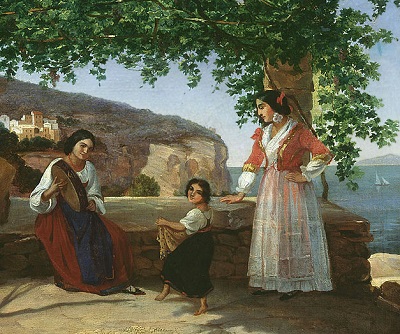
Image: Italian Women dancing Tarantella by Apollon Mokritsky 1846, source wikimedia commons

Il cruciverba della casa (House crossword puzzle)

Agli italiani piace passare tempo in casa.
Molto spesso invitano a casa gli amici per cena o per un dopo cena.
Casa dolce casa!
A te piace passare tempo in casa?
Inviti gli amici a casa tua?

Italians like to spend time at home.
Often times they invite friends at home for dinner or for an after dinner.
Home sweet home!
Do you like to spend time at home?
Do you invite your friends at home?

To practice Italian, in this activity we invite you to listen and play…
PRACTICE HERE: Italian/English Version

Para practicar el idioma italiano, en esta actividad te invitamos a escuchar y jugar…
PRACTICA AQUÍ: Versión Italiano/Española

(image courtesy of Roberto Nickson on unsplash)

Qual è la tua scelta? Uso del congiuntivo (Which is your choice? Understanding the subjunctive)

Il grande pittore Caravaggio aveva un caratteraccio e non esitava ad usare la violenza. Questo fatto lo mise molto spesso in seri guai.
Per molte persone la stizza e la rabbia sono dei sentimenti difficile da controllare. Sembra che non abbiano scelta fra una reazione rabbiosa, emotiva e incontrollata e un’azione equilibrata, efficace, appropriata alla situazione. Non sono flessibili.
E tu? Sei una persona che si arrabbia facilmente?
Riesci a scegliere la reazione più opportuna in tutte le situazioni?
Completa questa attività per capire come il congiuntivo aiuta a gestire le emozioni.

The great painter Caravaggio had a terrible temper and did not hesitate to use violence. This fact put him several times in serious troubles.
For many people anger is a hard feeling to control. It seems like they don’t have a choice between an angry, emotional, and uncontrolled reaction and a balanced, effective and appropriate action. They are not flexible.
And you? Are you a person who gets angry easily?
Can you choose the most appropriate reaction in each situation?

Complete this activity to understand how the subjunctive helps manage emotions.

To practice Italian this week we invite you to read and test…
PRACTICE HERE: Italian/English Version

Para practicar el idioma italiano esta semana te invitamos a leer y testar…
PRACTICA AQUÍ: Versión Italiano/Española

Che c’è? (What’s going on?)

L’espressione “che c’è?” è spesso usata se notiamo che qualcuno è triste o preoccupato e vogliamo sapere cosa succede, se qualcosa non va.
Sei triste tu?
Che c’è?

The expression “che c’è?” (literally “what’s there?” = what’s wrong?) is often used when we notice that someone seems sad or worried and we want to understand what’s going on or if something isn’t right.
Are you sad?
What’s going on?

To practice Italian this week we invite you to read and test…
PRACTICE HERE: Italian/English Version

Para practicar el idioma italiano esta semana te invitamos a leer y testar…
PRACTICA AQUÍ: Versión Italiano/Española

Picture source 123rf.com

L’amicizia (Friendship)

Fabrizio Bentivoglio e Diego Abatantuono
nel film Turné di Gabriele Salvatores

(fonte Wikipedia)

In Italia l’amicizia è un aspetto fondamentale della vita. Con gli amici si condividono gioie e dolori. Ci si aiuta e ci si supporta.
L’origine, (l’etimologia), della parola “amico” deriva dal verbo “amare”, ma non nel senso di “innamoramento”; nel senso di voler bene in maniera disinteressata.
Qual è la vera amicizia per te?

In Italy, friendship is a fundamental part of life. With friends, you share both joys and sorrows. Friends help and support each other.
The origin (etymology) of the word “amico” (friend) comes from the verb “amare” (to love) – not in the sense of being in love, but in the sense of caring for someone selflessly.
What does true friendship mean to you?

To practice Italian this week we invite you to read…
PRACTICE HERE: Italian/English Version

Para practicar el idioma italiano esta semana te invitamos a leer…
PRACTICA AQUÍ: Versión Italiano/Española

Picture from the movie: Turné by Gabriele Salvatores

Cruciverba: i contrari (crosswords: the contraries)

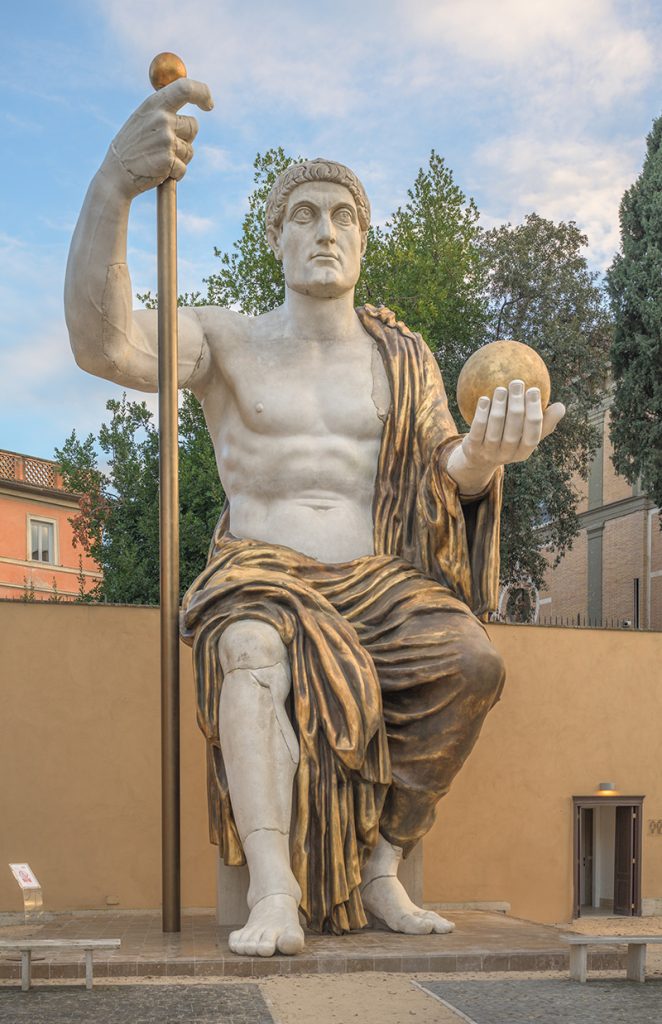
Ricostruzione virtuale del Colosso di Costantino, Musei Capitolini, Roma

Quanti contrasti ci sono nella vita?
La felicità e il dolore, il bene e il male, grande e …
I contrasti richiamano la nostra attenzione.
Sai qual è il contrario di “grande”?

How many contrasts are there in life?
Happiness and sorrow, good and evil, big and …
Contrasts draw our attention.

Do you know the contrary of “grande”?

To practice Italian this week we invite you to play …
PRACTICE HERE: Italian/English Version

Para practicar el idioma italiano esta semana te invitamos a jugar …
PRACTICA AQUÍ: Versión Italiano/Española

Picture source Wikipedia.it

Differenza fra “ti voglio bene” e “ti amo” (Difference between “ti voglio bene” and “ti amo”)

Rodolfo Valentino e Nita Naldi in “Cobra” (1925)

In Italia c’è una differenza fra l’espressione “ti voglio bene”, utilizzata con parenti, bambini o amici e “ti amo”, utilizzata con le persone di cui si è innamorati.
Ami qualcuno?
Vuoi bene a qualcuno?
Quanti diversi tipi di amore conosci?

In Italy there is a difference between the expression “ti voglio bene” (I am fond of you, I care for you), used with relatives, children or friends, and “ti amo” (I love you), used between adults with the person you are in love with.
Do you love someone?
Are you fond of someone?
How many different kinds of love do you know?

To practice Italian, in this activity we invite you to sing…
PRACTICE HERE: Italian/English Version

Para practicar el idioma italiano, en esta actividad te invitamos a cantar…
PRACTICA AQUÍ: Versión Italiano/Española

(Image courtesy of Wikipedia)

L’uovo di Colombo e i plurali irregolari (The egg of Columbus and irregular plurals)

Pasqua in Italia è una festa nazionale.
Buona Pasqua!
Pasqua è anche il momento delle uova. Conosci l’espressione “questo è l’uovo di Colombo”? Si riferisce ad un’idea brillante o ad una scoperta che una volta trovata sembra semplice ed ovvia.
Si racconta che “Colombo era a cena con alcuni nobili spagnoli quando…”

Easter in Italy is a national holiday.
Buona Pasqua! (Happy Easter!)
Easter time in Italy is also the time of eggs. Do you know the expression “questo è l’uovo di Colombo” (this is the egg of Columbus)? It refers to a brilliant idea or discovery that seems simple or obvious after the fact.
It is reported that “Columbus was dining with many Spanish nobles when…”

To practice Italian this week we invite you to read, listen and play…
PRACTICE HERE: Italian/English Version

Para practicar el idioma italiano esta semana te invitamos a leer, escuchar y jugar…
PRACTICA AQUÍ: Versión Italiano/Española

Picture courtesy of pexels

Guardarsi: verbi riflessivi e reciproci (Looking at each other: reflexives and reciprocal verbs)

Picture from the movie “My best enemy” by Carlo Verdone

A volte non è facile guardarsi negli occhi.
A volte non è facile capirsi.
A volte non è facile sorridersi.
A volte non è facile usare i verbi reciproci.
Ma tu conosci la differenza fra verbi riflessivi e verbi reciproci?
Ti guardi negli occhi con i tuoi amici?
O ti specchi solo nelle vetrine?

Sometimes it is not easy to look into each other’s eyes.
Sometimes it is not easy to understand each other.
Sometimes it is not easy to smile at each other.
Sometimes it is not easy to use reciprocal verbs.
Do you know the difference between reflexive verbs and reciprocal verbs?
Do you look your friends in the eyes?
Or do you only look at yourself in the shop windows?

To practice Italian this week we invite you to play…
PRACTICE HERE: Italian/English Version

Para practicar el idioma italiano esta semana te invitamos a jugar…
PRACTICA AQUÍ: Versión Italiano/Española

Picture from the movie “My best enemy” by Carlo Verdone

Mi piace, non mi piace (I like, I don’t like)

Studiare i verbi italiani!

I verbi sono “parole d’azione” e sono molto utili quando si parla: indicano quale azione avviene (o è avvenuta o avverrà). Per parlare fluentemente, bisogna avere la coniugazione dei verbi sempre pronta “sulla punta della lingua”.
Ti piace studiare i verbi?

Verbs are ‘action words’ and they are very useful when you speak: they indicate what action is happening, (or happened, or will happen). In order to speak fluently, you need to have verb conjugations ready “on the tip of your tongue”.
Do you like studying the verbs?

To practice Italian this week we invite you to listen, play and test …
PRACTICE HERE: Italian/English Version

Para practicar el idioma italiano esta semana te invitamos a escuchar, jugar y testar…
PRACTICA AQUÍ: Versión Italiano/Española